Never Sleeps

While a pastor on the Fort Berthold Reservation I was honored with the Indian name, "NeverSleeps". It was primarily because I was often responding to particular needs in the middle of the night.

Even more relevant, the Lord Himself, Maker of all, "Never Sleeps".

Surely you know.
Surely you have heard.
The Lord is the God who lives forever,
who created all the world.
He does not become tired or need to rest.
No one can understand how great his wisdom is.

Isaiah 40:28

Welcome to every reader. I am a simple follower of Jesus. He is perfect, I often fall short.

Showing posts with label compassion. Show all posts

Saturday, February 19, 2022

Near The Top of The Hill

Near The Top of The Hill

(“Because of our God’s merciful compassion, the dawn from on high will visit us.” Luke 1:78)

The trail was no longer visible,
time and rain and winds and snow
had scraped the surface down to
virgin earth again.

All anyone could see was the lone stranger
silhouetted on the hill and
no one
asked how he got there.

But he knew.
But was too far away for his voice to carry.
He knew the company he kept at the
trailhead years ago.
He knew the risks they took and the
trout they caught
in waning daylight.
He could remember it all

Alone

Near the top of the hill.

Only a few had left him,
the rest simply scattered to other adventures.
Now the only connections he had were
electrons--
and wifi--
though that was spotty on the solitary lightyears
where he dwelt.

All anyone could see was a foggy figure
on the gray days when mist
turned the mountains to mystery again.
Those were the moments that prompted
theories of myth.

He was only a man.

Some days it felt as if his heart was left behind
somewhere near the beginning of the trail.
One degree off course and decades to walk
led him to the lonely seclusion he
had not chosen.

Each day began and
each day ended.
And those who looked on

Wondered what they had missed.

Sunday, May 2, 2021

Would You Stop?


Would You Stop?

(“When the Lord saw her, He felt compassion for her and said to her, ‘Do not go on weeping.’” Luke 7:13)

Would you stop the world for just one moment,
would you look at me and see the scars
My clothes are worn, my heart is torn,
and my eyes cannot form the beauty I once knew.
No one sees me, no one notices,
no one watched me drenched in tears.

The gentle hands have become hammers
to
drive home points of disagreement. The voices
that once cracked with mutual grief
now shake in appalled increments like
the last line in obits where it tells who
was left behind.

Would you please pause time so they can see me,
would you place a parenthesis please so someone can drive
by and remind themselves why we were
friends in the first place?
Would you help them remember their promises of love,
would you help them see what has died inside?

There are no more discussions; even debates would revive
the barren patch that goes against the grain within.
They stay away while the pain twists my brain like a spigot.
They feign loyalty, while correcting me for the density
of death I express. If I lied about life, they would applaud me.

Would you please lift me off the carousel, the horses have
run their course. Would you revise this edition of me?
I want no thrill rides, just a quiet meal with anyone who
once pledged their love
and is still unafraid to
give it.

Would you look at me? Would you stop the calliope and
hear me closely? Would you (not tomorrow) attend to this
compressed sorrow? Would you see how the years and hours
have piled up on me? Would you stop and start
with me again?

Thursday, July 2, 2020

Beyond our Reach


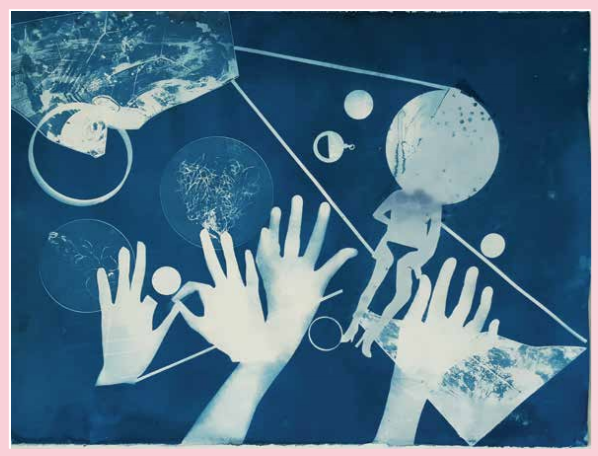
Art: Ofri Cnaani
Beyond our Reach

(“He will once again have compassion on us; he will tread down our iniquities. You will hurl all our sins into the depths of the sea.” Micah 7:19)

Yet my heart still yearns for more love than I’ve been offered,
and I cannot admit it to the faithful and devoted
for I should be content with the love they espouse,
the love they says is unending,
(and the love I know to be true).
Yet so few grew in their affection for
a stumbler who trips over mere gravel,
a bumbler who constantly unravels plans and acquaintances.

Still I’ve groveled to earn back the friendship,
the kinship I admittedly broke. But I haven’t dug
deep enough, I think. The smoke still hovers over
embers of anger and rejection. I haven’t shoveled
long enough to prove my grief is great as their scars.

Let’s all go for a swim on top of the ocean,
let’s all go for a hike on top of the world,
let’s all seek adventures on top of dunes,
let’s all skim the top of rivers again.

I fear I’ve let the cat out of the bag,
I’m not as confident as my weekly proclamations.
There are few who care about my daily palpitations,
my constant mental storms and wilted white flags.

Let’s all glide above the atmosphere,
let’s all picnic above the earth,
let’s all round dance above the dust,
let’s all sing as if our hearts will burst.

My feet are calloused, my eyes itch from sand,
my directions are misguided, my arguments are obtuse.
The journey has been painful, knocked all my certainty loose,
the navigation is not at fault, but the way is weary,
and every sense assaulted like moth-eaten quilts.

Still I embark, never on time. Later than ever these days,
and watching my thoughts unwind. My destination has
always been the same; a tribe, a gathering, a clan,
a caravan, a band that loves to sing the same song

Out of tune because the earth keeps rolling.
The instruments enter and exit while the voices
find a common song,
An early song,
a folk song,
the music that encircles top and bottom
and leaves the air cleansed by the exhaled version of
the eternal song.

Friday, June 21, 2019

Overburdened


Related image
Overburdened

Jesus said, “How terrible it will be for you experts in the Law, too! You load people with burdens that are hard to carry, yet you don’t even lift a finger to ease those burdens.” Luke 11:46

There is one word that describes Jesus’ strong message aimed at the Pharisees and teachers of the law: hypocrisy. Time and time again he tells them that their actions do not match their teaching. He excoriates them for looking good on the outside but inside are “full of greed and evil”. He says they “neglect justice and the love of God.” They love to be noticed in the marketplace; they teach others but are unteachable themselves.

Jesus uses a picture common to the customs of the day. They “load people with burdens” in the same way a person would load up a donkey, camel or other beast of burden to the point where it could hardly move. As they traveled down the road, the owner would walk alongside, carrying nothing himself, berating and beating the animal if it slowed down or stopped, with no concern for the animal’s feelings or welfare.

The religious leaders had encumbered people in the same way, with “burdens too hard to carry.” The NLT paraphrases it this way, “You crush people with impossible religious demands.” There are two ways they did this. First, they would insist on “eye for an eye” punishment for any infraction of the Law. They had forsaken justice and mercy, having boiled God’s word down to a list of moral duties that they themselves were not able to keep. In other words, they had forsaken humanity itself.

It goes without saying that we need laws and guidelines for life. We need guide rails to keep us on track and to prevent us from falling over the edge. But when the law becomes more important than people, we have created an idol of the law.

This is what the Pharisees did with the Sabbath. When Jesus healed on the Sabbath, they accused him of breaking God’s law. Jesus healed a paraplegic who had never walked. The man, joyful over his healing, picked up his mat (the bed upon which he slept and from which he begged), and began to walk home. Because it was the Sabbath, the Pharisees singled him out for judgment and criticism. No rejoicing that God had healed a suffering man, only idolatrous worship of “the law”.

This led into the second way in which they loaded people down. Not only did they elevate the law over human need, but they added their own traditions to it. A person could not carry a burden on their shoulders on the Sabbath, nor with their “left of right hand”, but if it could be carried with a single finger, this was allowed. They accused Jesus’ disciples of “doing work” on the Sabbath when they took a few grains from a stalk of wheat to eat. They were “harvesting” on the Sabbath.

But Jesus tells them that they load people down, doing nothing to actually help them carry the very loads they have created. The limit of a Sabbath day’s journey was 2,000 cubits (about 1,000 yards) from a person’s residence. The religious leaders created their own loophole. They would tie a rope across the end of the street, the end of the street became his residence, and he could go 1,000 feet beyond that.

These loopholes, of course, were reserved only for the religious elite. For the common folk they would not even lift a finger to “ease those burdens.”

Imagine a church that has a small storage shed on its property. It is discovered that a homeless young man has been sleeping in it over the winter. He also has a relationship of several years with both the church and its pastor but did not have “permission” to sleep in the shed. Now imagine that one or more of the church leaders discover the situation. They immediately react with “this cannot happen!” The young man is expelled from the shed. Oh, and no further ideas are floated about how to actually help the young man.

Is it possible that we, too, load people with burdens and do not lift a finger to help them?

Imagine a church where people are taught that evolution is evil and demonic. That church hosts a “Creation Seminar” and invites area pastors and churches to attend. But, as it turns out, the seminar does not simply show evidences for a Creator. It is a diatribe against any view other than 6,000-year-old earth. It forces anyone who disagrees to be seen as an outsider even though neither the Bible nor Science advocate for such a young earth.

Is it possible that we, too, load people with burdens and do not lift a finger to help them?

More importantly, though, is what is currently taking place at our southern border. Yesterday, a Federal career attorney with the Department of Justice actually got up and argued before the Ninth Circuit Court of Appeals that the following met their interpretation of "safe and sanitary" for children:
1. Providing no bedding and forcing the children to sleep on a concrete floor
2. Lights on 24/7
3. Cooling the room to extremely low temperatures (the infamous "Freezers" are kept at about 55, it's unclear the exact temp involved here but everyone agreed it was cold)
4. Providing only an aluminum "blanket"
5. Refusing to provide soap
6. Refusing to provide toothbrushes or toothpaste

Reread that list. Now imagine if anyone treated your child or grandchild this way. How can anyone make the arguments that this is an acceptable way to treat a child. How can any of my fellow citizens be okay with this? And, more to the point, how can any follower of Christ support an administration willing to load this ugly, sinful burdens upon innocent children? This is tidal wave of evil that a great many are cheering, or pretending does not matter.

Yes, it is possible. We are loading people with burdens and not lifting a finger to help them.

Here is how Jesus said he helped those who are burdened:

“Come to me, all of you who are weary and loaded down with burdens, and I will give you rest. Place my yoke on you and learn from me, because I am gentle and humble, and you will find rest for your souls, because my yoke is pleasant, and my burden is light.” Matthew 11:28-30

Jesus takes our burdens. Let us be like Jesus.

Thursday, January 17, 2019

Faith is the Reality


Image result for old rusting fiat


Faith is the Reality


“Now faith is the reality of what is hoped for, the proof of what is not seen.” Hebrews 11:1

When I was young, maybe nine or ten, I knew my parents’ income. My dad said at one time that he was making $7,000 per year. Now, remember, that is 1964 or 65. A couple of years later my mom announced that she had received a raise of $700 per year. I was smart enough to know we weren’t millionaires, but not quite savvy enough economically to realize we were on the lower end of “middle class”.

In fact, one year my dad bought my mom a car for Christmas. He liked making her search through the house for her main gift. So, he would decorate a box which she would open. Inside the box was another box with a note in it. The note told her to look inside the oven. Once there she found a second box with a note saying, “Look in the hall closet”. This went on for half a dozen boxes. Finally, the note said, “Go to the driveway.” We all followed mom and dad outside to see the car.

It was a Fiat. An old Fiat. A very old Fiat. Indeed, it was even missing the passenger’s seat which dad quickly explained he would replace as soon as possible. Mom’s big gift was an old, tiny, rusty Fiat that cost $50! To this day I’m not sure if that was a result of our economic situation or my dad’s bit of Irish parsimony.

Mom worked three jobs while Dad pastored a church in Pasadena, CA. My brother and I both had paper routes. My sisters, too young to have jobs yet, helped us prep our bundles before we went into the neighborhood tossing newspapers that slid right up to our customers’ doors. Usually.
I really had little evidence of how much money my family had. I knew we went to McDonald’s occasionally and we could each order a hamburger. But, if we wanted a cheeseburger, we had to pay for the cheese ourselves. As an adult I have come to realize my dad was a child of the Great Depression. It has helped me understand his penny-pinching ways.

The only access I had to real “cash” was Dad’s wallet which usually sat on top of the blonde chest of drawers in their bedroom. I was inquisitive, and often looked through the contents of that leather envelope. There were S&H Green stamps, a Gulf gas card, his driver’s license, pictures of mom and us kids. And then I would find the cash. I don’t think I ever found more than $20 in Dad’s wallet. Usually only a handful of $1s. Nope, the evidence told me we were right to get by with a $50-dollar car!

What I didn’t realize, of course, was my dad’s wallet was not the only evidence of the family’s assets. There was the banking account, the savings account, a retirement account and a huge coin collection that, at least in my dad’s mind, was worth thousands!

What if I lived each day in fear that the only assets we had were the few bills I discovered in Dad’s wallet? What if I thought I would drive a $50 Fiat’s with a missing seat for the rest of my life?

But there was something more than the “evidence” I personally discovered. There were two loving, though imperfect, parents doing all they could to provide for their kids. We took in every sight that was free or inexpensive in greater Los Angeles. We frolicked at the beach. We wandered through Huntington Gardens. We drove up to Mount Baldy.

For me, this is an earthly picture of what faith in my Heavenly Father is all about. I know Christ from the Gospels. And I know Him from the witness of His Spirit in my heart. But, I do not see Him, I cannot see His eyes, feel His human hand on my shoulder.

But, my faith in Him is the same as the faith I had in my parents; only so much greater because He is greater. Trials are the opportunity to trust in the bank account of the patience Jesus offers. Failings are a chance to draw upon the sweetness of His mercy and forgiveness. Days of clouds and wildflowers are like looking through Dad’s wallet. They are the dollar bills, but Father-God has so much more prepared for us.

Today, trust the abundant reserves of Father-God. He has more grace, more power, more compassion and comfort than is possible to imagine.

Friday, October 6, 2017

Binding the Wounds

Binding the Wounds

“This is what the Lord Almighty said: ‘Administer true justice; show mercy and compassion to one another. Do not oppress the widow or the fatherless, the foreigner or the poor.’” Zechariah 7:9, 10a

Jackie Robinson, the player who broke baseball’s color barrier, endured a difficult rookie season with the Brooklyn Dodgers. Fans hurled racial slurs and mailed death threats, opposing pitchers threw beanballs, and even some of his own teammates started a petition against him.

One man who stood by him was shortstop Pee Wee Reese. At one game, fans sitting close to the field abused Robinson mercilessly, and it looked as if he might be near the breaking point. At that moment, Reese walked across the field to where Robinson was playing, and put his arm around his teammate’s shoulders. The crowd fell silent.

Jackie Robinson and Pee Wee Reese showed the courage to stand for what was right, even when the majority opposed them. Similarly, Zechariah encouraged the Israelites to pursue true justice, even when many were practicing hypocrisy and self-centeredness.

We have witnessed much suffering across the world in the past several months. Hurricanes have ripped across Texas, Florida and the Caribbean. Over 350 people have lost their lives in Mexico’s magnitude 7.1 earthquake. In South Asia typhoons and flooding have taken 1,200 lives and forced millions from their homes. And now, just in the past week at least 59 were killed and more than 500 injured by a mass shooter in Las Vegas.

It is easy to feel overloaded with the scope of suffering we encounter. But if there is one thing every follower of Jesus is called to do, it is to continue showing God’s mercy and compassion as much as we can. If anything, disaster and grief can awaken greater depths of empathy within us for those who suffer.

True justice not only reacts in sympathy toward victims, but also acts to prevent future harm. We must open our hearts to the cries of those who endure not only the catastrophe of natural disaster, but to those who endure the continuing trials of poverty and injustice. Just as Pee Wee Reese stood up for Jackie Robinson we need to risk standing for those who are forgotten, misunderstood, and unfairly judged.

When we consider that God in Christ entered the world as a human, becoming a servant to us and suffering violent death at our own hands, our minds can hardly fathom the depths of His love. We did the worst possible thing to the Father of Love; we killed God! And what did Jesus do while hanging upon that instrument of death and violence? He said, “Father forgive them, they do not know what they are doing.”

That should leave no doubt in our minds about God’s heart toward humanity. Like the Good Samaritan, we are not called to tell people “You wouldn’t have gotten hurt if you hadn’t traveled that road.” Instead, exercising “true justice”, we meet the need and go beyond the boundaries of race, religion, poverty or any other human constructs and simply bind the wounds of those who suffer.

My roots are in the South. Though our family moved to Southern California when I was in second grade, I was born in Texas and spent nearly every holiday with grandparents in Tulsa, Okla. After Patti and I were married we moved to Oklahoma to be near my dad. That “southern courtesy” still runs through my veins.

Grandmas call you “hon” and people say, “Well, bless your heart” in response to just about anything. (Sometimes meaning the exact opposite of “bless your heart”, though.)

God is calling for something more than courtesy. The prophet Zechariah reveals the heart of God as he calls the people to more than surface level kindness, but to action rooted in heartfelt affection… “let none of you devise evil against another in your heart.”


That’s the real key, isn’t it? What we say and do is always a product of our inner self. Take some time and reflect God’s actions of compassion as revealed in the Cross. Consider how He sacrificed for us in the middle of all our muck and dysfunction and let His faithful love energize your own.

Tuesday, September 12, 2017

Wisdom to Be


Wisdom to Be


“If any one of you falls short in wisdom, they should ask God for it, and it will be given them. God, after all, gives generously and ungrudgingly to all people.” James 1:5

Almost every Christian who wants guidance knows this verse well. We have been told that God will give us all the wisdom we need when we ask Him, and that He will never begrudge us the gift of His wisdom. That much is true. Our problem, I believe, is that we substitute the word “guidance” for “wisdom”.

Let me explain. Perhaps we need to choose whether to take this job or that one. Or we are considering buying a new house. We rely on this verse, ask God for wisdom (thinking “guidance”) and expect some sign to tell us which choice to make. I do not want to be misunderstood; God often gives specific guidance about choices we face.

But wisdom is a much broader category than simple “guidance”. What if wisdom has to do more with who we are than what we should do? Isn’t God more interested in forming us into men and women who carry the compassion of Christ in our hearts? And, as we ask for His wisdom, what if He responds by transforming us to a greater degree into the likeness of His Son?

Let me share from own recent struggle with wisdom. Most of you know I have suffered from a daily headache for nearly nine years. It hinders everything that I do; writing, reading, physical activity, even taking road trips.

Here is what makes it so challenging. Every "trial" I've endured thus far in my life could be traced either to failings on my part or someone else's, if not entirely, then in part. I could act on it. I could repent. I could confess. I could forgive. I could make amends. I could reconcile.

But there is no cause for this chronic pain that I can tackle with better piety. In fact, the pain hinders most of my spiritual "practices". Prayer is an effort. The pain shortens my attention span when reading Scripture. And acts of mercy are fewer and farther between, as are most of my activities.

I cannot fix this with better devotion to God. And, yes, I understand His strength is made perfect in weakness and that His grace is sufficient. But the pain is an iron door which seems to limit access to experiencing these things.

That's the most honest assessment I can make. My faith is challenged because, for once, I see no cause, no solution and no way forward. I am, in many ways, walking in the dark while I try to walk in the light.

I have asked God for wisdom. I have sought medical advice, spiritual counsel, and poured out my heart to family…and well, Facebook. I cannot keep up the pace I need to as a full-time pastor, yet I am not financially able to retire. There is more to that, but just understand, there seem to be very few choices. And I’ve been asking quite often for “wisdom”. “Show me another way, God.”

Recently (actually, yesterday) I began to think this way. “There is much I can no longer do because of this chronic pain. And, I hate the physical suffering as well. I don’t play tennis, don’t visit friends, don’t read, don’t write my poetry as much. But…I am still me.” That seemed like a breakthrough.

You see, I’ve been focusing on what I feel I need to do, and all the things I can’t do. But the pain has not changed one thing about who I am. For me, God’s wisdom may be to stop seeking to do things better and just be His beloved child, because that has not changed. I am His by faith in Christ, despite the pain.

That does not ease my physical suffering. And, if you are suffering, you may still endure hardship as well. But, ask God for wisdom; not just for what to do, but who to be. The next verse tells us to “ask in faith.”


Faith isn’t a power to gain control over our lives. Instead, it is surrendering our false sense of control into the hands of our loving Heavenly Father. Trusting Him means we no longer convince ourselves that, with enough faith, we can move that mountain. We put that mountain into God’s hands and simply trust Him for the outcome.

Saturday, April 4, 2015

At Least One

At Least One

(“Then the King will say, ‘For sure, I tell you, because you did it to one of the least of My brothers, you have done it to Me.’” Matthew 25:40)

I noticed the color of his voice, dark as midnight,
sorrowful as rain. I saw the sadness in his face, wrinkled in pain,
eyes squinting, the hurt unrestrained.

I expected the warmth I knew, the grace of noon in spring,
the mercy early and new. So much time had passed from the first
to the last
time I understood the best I could do
and the worst I had done
were not loaded upon a scale nor
could cancel each hellish act
with deeds done well.

I knew it now, embraced it how,
son and daughter, brother and sister,
are the new names for my anonymous past.

Today I could not understand, the frown, the hands
clenched like a widow’s upon the casket’s edge.
What loss could change the songs of heaven to
simple silence, a long pause of eternal time,
(a mere second of you disapproval took forever
as you scanned my face from eye to eye).

You looked at me, and the pain was a cannonball of sorrow,
as you looked upon the disregarded, the unrobed, the lately regarded
worst of sinners and simply said to me plainly, amen and
world without end:


“He was my friend” 

Tuesday, August 12, 2014

Robin Williams and God's Kingdom

“Jesus said, `I tell you the truth. No person can see God's kingdom if he is not born again.'” John 3:3

William Barclay said, "There are two great days in a person's life - the day we are born and the day we discover why." I think Jesus was saying something similar when he told Nicodemus, one of the Sanhedrin, that no one could see God’s kingdom unless he is born again. I am certain Nicodemus was a bit shocked; after all, he was part of the Sanhedrin, the 71-member Jewish judiciary council.

Nicodemus hasn’t even asked Jesus a question yet. He simply acknowledges that no one could do the great works Jesus had done unless God was with him. I happen to believe Nicodemus was sincere. He came at night, either because he didn’t want to be seen, or because he wanted a private interview with Jesus. Either one suggest that this wasn’t an effort to trap Jesus, but rather an honest inquiry into what Jesus was all about.

I am writing this just one day after the talented actor and comedian Robin Williams took his own life. He had one of the quickest comic minds, spinning off characters in non-stop monologues. At the same time, under the guidance of expert direction, he was able to deliver intimate and stirring dramatic portrayals in many of his films. By all reports he was an extremely generous man. His neighbors in Tiburon, Ca report he acted more like a neighbor than a celebrity.

Colossal talent, a huge heart and comedic genius all blended to present to the world a man with inestimable who you hoped could be your best friend. Though he may not have measured up to evangelical standards for faith, he had his spiritual side. He famously quipped, "I don't understand the whole fundamentalist thing; you see, I'm an Episcopal; that's Catholic Light. Same religion, half the guilt!”

So, we find his death hard to accept on two fronts. We have trouble accepting that behind the laughter and smiles was someone dealing with intense pain and suffering. And, for some, suicide is the unpardonable sin. They draw the conclusion that if a person was truly close to God, they would never take their own life.

Early in my Christian life I remember discussions about whether or not someone who committed suicide could go to heaven. I cringe to think I ever thought I had the right to judge such a thing. Now, experiencing more of life, walking through my own valleys of darkness, and understanding the grace of God in Christ to a greater degree, the question of the eternal destination of someone who has completed a suicide is the last one on my mind.

Think about how much love is being poured out for this wonderful man. Read the interviews of his closest friends. Listen to the depth of compassion from the family mourning his loss. This was a man deeply beloved. So, how, we ask, could he do such a thing? How selfish, we say, forgetting our own moments of darkness when love seemed to have evaporated away like puddles on desert dunes.

It is easy to say that “If he had been ‘born again’, he would never have done such a thing.” Such thinking angers me. It might have only fired a theological discussion in my younger days. But now I have seen the pain in the hearts of people who are deeply loved by nearly everyone in their lives, but for one reason or another, they do not sense it.

If I am anything, I am a “born again” Christian. Not because I’m a fundamentalist, not because I’m an evangelical, not because I support right-wing causes. Even as a youngster and teen I longed for God. I was a church kid. Even better, I was a preacher’s kid! I knew the rules, I talked the talk, I memorized the books of the Bible and earned the God and Country Award as a Boy Scout. But, I was still glued, brain, soul and body, to this material world.

The short story is that, at 17, I told Jesus, “If You are real, You can have control of my life.” He took me seriously, and there has been no turning back since that December day in 1972. I learned a great deal about God, the Gospel and walking with Jesus. I also learned a lot about evangelical culture, and until a dozen years or so ago, I had difficulty telling the difference between the two.

I also discovered a great deal about myself. When a boy makes a life-decision at 17 he may not realize how that plays out for a 35 year-old man with a wife and three children. What I did discover is, I had a terrible time feeling loved. I was scared stiff of failing or not being accepted. Every sin or mistake buried me beneath a hole of my own self-loathing.

I figured the key was being a better follower of Jesus. So, when my anxieties wouldn’t let me sleep, I got up, went out to the living room, knelt at our couch and poured my heart out in prayer and weeping. Sometimes only for a few minutes, sometimes maybe an hour. But, when I was done (drum roll please) I felt worse that when I had begun. (You didn’t expect the sentence to end that way, did you?) It wasn’t until into my 40s that I understood that I was afflicted with clinical depression.

From my own experience, and from conversations with fellow-sufferers, I can say without a shadow of a doubt, the level of depression has nothing to do with the level of one’s faith, or with their spiritual maturity. It just doesn’t! We would do well to listen to medicine when it comes to these things. The darkness I regularly wrestle with is not the result of a poor prayer life. It is not about demons attacking me. It is not about some sort of generational spirit. You can’t lay hands on it and make it go away. (Though, yes, I believe God can and does heal. But that is an act of His grace, not a measure of the sufferer’s spirituality).

Robin Williams has made me think a lot about my friends who suffer. I know, though they “should” realize I love them, they need to be shown over and over. They need my hugs. They are not whiners because of it; they have a real disease. I would not withhold insulin from a diabetic just because he needs it every day.

From what I’ve read, Williams was going back into a 12-step program to do some addiction fine-tuning. I do not think we can even imagine the pressures of a life lived in front of the entire world. Once, when an interviewer commented on Williams’ Oscar-worthy performances, he replied, “The Academy Award lasts a few moments. Then, I walk out on the street and someone yells out, “Nanu-nanu.”


Me? I’m going to try to let people in, to be more transparent. I’ll be 60 next year, I have nothing left to prove. If anything, being “born again” means I have an entirely different family. It means I have a family that understands unearthly love that doesn’t measure worth based on performance or emotional fortitude. I’m pretty sure Robin Williams is experiencing the love of God right now in a way he always longed to on earth. 

Tuesday, July 29, 2014

Today You Will be With Me

“Jesus answered him, ‘What I’m about to tell you is true. Today you will be with me in paradise.” Luke23:43

I vowed I would never say it, never entertain the thought; but the last night of our two week vacation with family in Minneapolis I cried out, “God must be punishing me!” The pain had continued the entire 14 days. I only felt good enough one morning of the entire vacation to venture outside of our oldest son’s house to find a coffee shop for some quiet reading. Even then, I stayed a very short time. That was the only time I left their house.

Wednesday, December 11, 2013

The Friends without Words

“They feel but the pain of their own bodies and mourn only for themselves.” Job 14:22

We all are stymied when it comes to the right words and expressions to aid a friend who is enduring chronic pain or a life tragedy. What words are there when a man discovers his brother, barely a year older than he, was just found dead and had no indications that his body was giving out. What do you say to the family who lost their jobs, moved to a new city, and within two weeks lost 75 percent of their belongings in a house fire? What do you tell the father young son in his mid-20s just fell at his wife’s feet, succumbing to heart failure?

Thursday, December 5, 2013

A Rich Harvest

“The harvest is rich, but the workers are few. Pray that the Lord of the harvest will send out workers to gather in his harvest.” Matthew 9:37b, 38

To me, this is one of the most counter-intuitive sayings of Jesus. In fact, my ear almost always hears Him saying, “The harvest is rich, the workers are few. Pray the Lord of harvest to send out workers…and make sure you are one of them!” But that is not what He says at all.

Tuesday, July 9, 2013

Increase and Abound

“And the Lord make you to increase and abound in love one toward another, and toward all men, even as we also do toward you.” 1 Thessalonians 3:12

Every follower of Jesus would agree that His commands include loving others. Based on His teachings, we would have to admit that it is the highest command. He tells us that the first command is loving God with all our heart, mind, soul and strength, and the second is “like it”, loving our neighbor as ourselves. He tells His disciples to obey His “new” command, “Love each other the same way I have loved you.” And, in the same conversation He tells them the world will recognize they are His followers by that very thing; their love for one another.

Wednesday, April 10, 2013

For the Lowly


“Though Yahweh is high, yet he sees the lowly, but the proud he perceives at a distance.” Psalm 138:6

As the Missouri River wound its way across Montana into the hills and razorbacks of northwest North Dakota in the 1860s, it brought steamers carrying passengers and freight across the plains toward the more populated east. There was a post at Like-a-Fishhook Village on the Fort Berthold Reservation. From atop the second story of the young missionary’s chapel, the towers of the stockade or atop the Native’s larger earth lodges, one could see about six miles upriver. Once a steamer was spotted, people knew they had 20 minutes to prepare to meet the ship to board it or load cargo.

Tuesday, February 5, 2013

The Lord is Righteous


The Lord is Righteous

(“For the Lord is righteous; He loves righteous deeds. The upright will see His face.” Psalm 11:7)

“Righteousness” is not a word we use very often in everyday language. Even as followers of Jesus we may have a vague notion of righteousness. We know it has something to do with being good, and being fair. Because it is heard more often in religious conversation than informal talk, it can take on an other-wordly sense, and we think little about what it means in 21st century day to day life.

Friday, December 28, 2012

Beyond Words


(“This is how God showed his love for us: God sent his only Son into the world so we might live through him.” 1 John 4:9)
How do you describe the endless distance of space which we call the universe? How do we fathom the long arch of time without end or beginning? How even do we understand the infinite smallness of the miniature sub-atomic particles of which the entire world is made? It takes volumes to even learn the language used by those who speak of such things.

Monday, December 17, 2012

Are Enduring


Are Enduring

(“Resist him, strong in your faith, because you know that your brothers and sisters throughout the world are enduring the same kinds of suffering.” 1 Peter 5:9)

Blankets and clothing,
baby cloths and netting,
what can I give for the suffering;
what can I do for the hunted left out in the storm?

Food banks and free dresses,
toy donations and grandchild kisses,
what does it mean so close to me;
what can I do when most of me is spent on
another trinket the in-crowd on tv insisted would
change my life, make me free, and give me all the love
and company a man could ever ask for. I would change the
car I drive
if I had the money.

Until one mother calls me to give her child a ride home,
you see, practice will go past nine tonight and it is far too
late for a young teen to walk home even our little hamlet.
“She would walk, otherwise,” I promise, the mother almost
apologized…and I stopped her. “Of course she can have a ride.”

I would change the car I drive
except for families I know
that don’t possess even one.

Boxes of underwear, schoolbooks and pencils,
a hand-drawn mural for the school-wall from eight little
children in Sunday School that only know
some others as tiny as they are scared of halls that once
felt so safe.

All they know, and I know, is Jesus gave. My garage has boxes
filled with things I haven’t seen in a decade. My life is too crowded
to keep from filling a hole somewhere that lets in far too much winter air.

Thursday, November 22, 2012

Every Day


“Every day they continued to meet together in the temple courts. They broke bread in their homes and ate together with glad and sincere hearts, praising God and enjoying the favor of all the people. And the Lord added to their number daily those who were being saved.” Acts 2:46, 47

I am about to go home and sit down to a marvelous Thanksgiving feast prepared by my wife and daughter. The last few years it has been just “we three” for the November holiday. We have two grown sons; one lives with his wife in Minneapolis along with our 4 year old granddaughter, and the other is in Guatemala finishing his last year with the Peace Corps. Normally we would invite a handful of people who have nowhere else to go, but my headaches are only exacerbated by adding more people to the mix.

Monday, November 5, 2012

Pocket Neighborhoods


Pocket Neighborhoods
(“Seek good and not evil—and live! You talk about God, the God-of-the-Angel-Armies, being your best friend. Well, live like it, and maybe it will happen.” Amos 5:14 [The Message])

Shall we sentence capital, thus ending our options,
if one innocent life can no longer speak?
We know the dead have no voice,
their pockets are empty,
their mouths without sound,
their eyes no longer seeking the justice
only the living can find.

Shall we put our hands in our pockets
fingering the gold coins we keep warm
against another cold snap? And what if the gold
is less precious than bread,
silver the less than the tin sardines are sold in?

We dreamed and built our houses better,
higher on the hill than we expected. The climb
was worth it, here out of touch from the grimy fingers
that pretend only to want lunch but haven’t eaten in a week.

We hire singers to soothe the conscience which occasionally
prompts backstage of our private performances. When we
run out, we pay double for musicians to make up tunes
just to keep the background noise right up front
drowning the script good parents taught about
give, share, kind and doubt about our certainties
of who deserves dessert and who should be left out.
And we sing loudest when the band strikes up
“Amazing Grace”.

We need a new neighborhood, perhaps where the condos
are built of cardboard; the timeshare pools the puddles after rain.
We need neighbors by name, by cousin, by cuisine we’ve
never tasted and now, pockets empty, are free to dine.